


Arrival → Connection → Activity → Community → Worship
We design architectural spaces as a connected story rather than three separate rooms. Together they create a progression of arrival, belonging, activity, and spiritual engagement—spaces intentionally designed around how students naturally gather, interact, and build community. The architecture is functioning as ministry infrastructure, shaping behavior through atmosphere and spatial experience.
The Gathering Hub – A Modern Social Commons
The first space feels like the front porch of the student ministry environment—a hospitality-centered commons designed around conversation and informal connection. The architecture intentionally blends coffeehouse culture with community space. Large gathering tables become anchors for relational interaction while lounge areas and game zones create multiple scales of engagement.
The material palette of warm woods, polished concrete, exposed structure, and softened lighting creates a mature environment that avoids feeling overly childish. High ceilings give the room openness and energy, while the darker ceiling plane visually lowers the scale and creates intimacy within a large volume.
The snack bar functions as more than an amenity; architecturally it becomes a social magnet. Rather than students simply passing through, the space encourages lingering. Seating choices—from high-top conversation areas to communal tables—allow students to self-select their comfort level and social experience.
This room communicates a subtle message: you are invited to stay.
The Worship and Activity Space – Energy Meets Purpose
The second environment shifts from hospitality toward movement and engagement. The architecture intentionally merges recreation with worship identity, creating a hybrid environment where ministry and student culture overlap naturally.
The room is organized around a visible platform and gathering focal point, but rather than making the stage dominant, activity zones surround it. Ping pong, foosball, lounge seating, and performance areas coexist in one integrated space. This reflects an important design philosophy: students transition fluidly between play, conversation, and worship.
String lighting softens the industrial shell and creates warmth against the dark exposed ceiling. Large-scale wall graphics act as environmental storytelling elements, reinforcing values and identity. The oversized imagery gives students visual representation of themselves within the ministry.
The architectural experience says:
“Faith happens here, but community happens first.”
Rather than separating sacred and social environments, the design allows them to coexist naturally.
The Neighborhood Café – A Space of Belonging
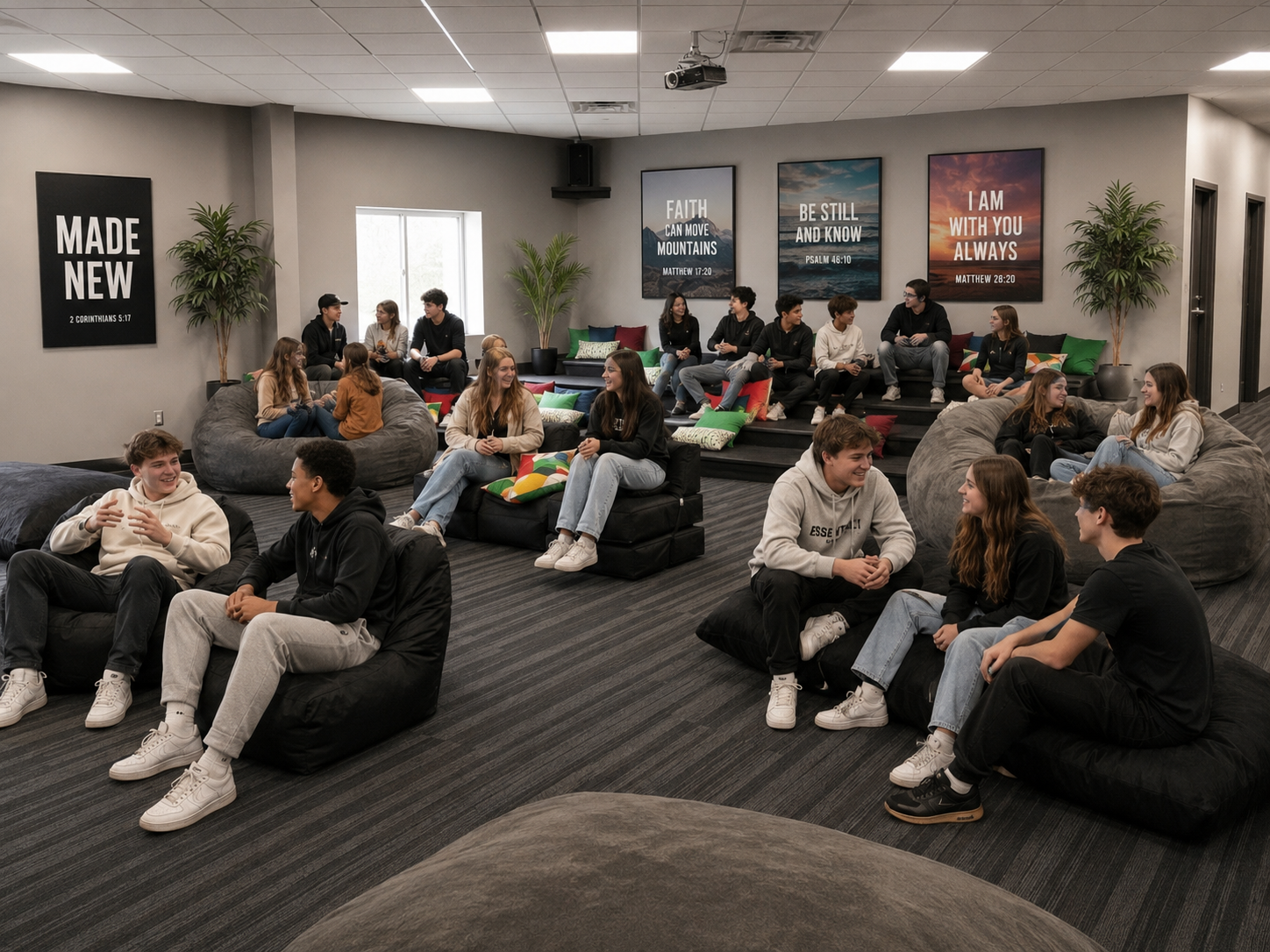
The third space feels more intimate and neighborhood-like in character. Brick textures, layered wood elements, soft lighting, and café seating create a strong sense of familiarity. This environment is scaled for conversation and relationship-building.
Unlike traditional youth rooms designed around a single activity, this layout creates smaller social zones within one larger volume. Students can gather in pairs, small groups, or larger clusters without the room feeling fragmented.
Architectural moments such as the illuminated “you belong here” statement become more than signage—they become emotional anchors. Vertical elements, layered materials, and integrated plants soften the industrial framework and introduce warmth.
The seating diversity is particularly effective. High-top tables, café seating, stools, and lounge areas support different social dynamics and personalities. Students who may not enter a loud activity zone can still find a place where they feel comfortable.
The design communicates a clear message:
“Before you participate, you belong.”
The Overall Architectural Narrative
Our design language remains consistent: exposed structure, warm materials, hospitality-centered planning, and multiple engagement zones. Yet each space carries its own emotional identity.
The sequence creates a journey:
Rather than designing rooms for programs, these spaces are designed around student behavior and human interaction. Architecture becomes less about square footage and furniture placement and more about creating environments where relationships can naturally happen.
The result is not simply a youth facility—it feels like a student-centered ecosystem designed to make ministry spatially tangible.
