


These worship environments represent a broad architectural philosophy: worship spaces are not one-size-fits-all. At Daman+Lechtenberger, we design environments around ministry vision, attendance patterns, worship style, technology integration, and long-term flexibility. Each room becomes a response to how a church gathers, engages, and creates meaningful experiences. Rather than designing simply for seating capacity, we approach worship architecture as the shaping of experience—considering acoustics, lighting, circulation, stage visibility, and adaptability as one integrated system.
Architectural Worship Design: Flexibility, Technology, and Experience
Across these examples, the architectural language varies—from large auditorium environments to highly flexible multipurpose spaces—but each shares a common design principle: every element works together to support worship, communication, and community.
Acoustics and Sound Panel Integration
One of the defining architectural elements visible throughout these spaces is the intentional use of acoustical treatment. Worship environments today require much more than amplification; they require acoustic control.
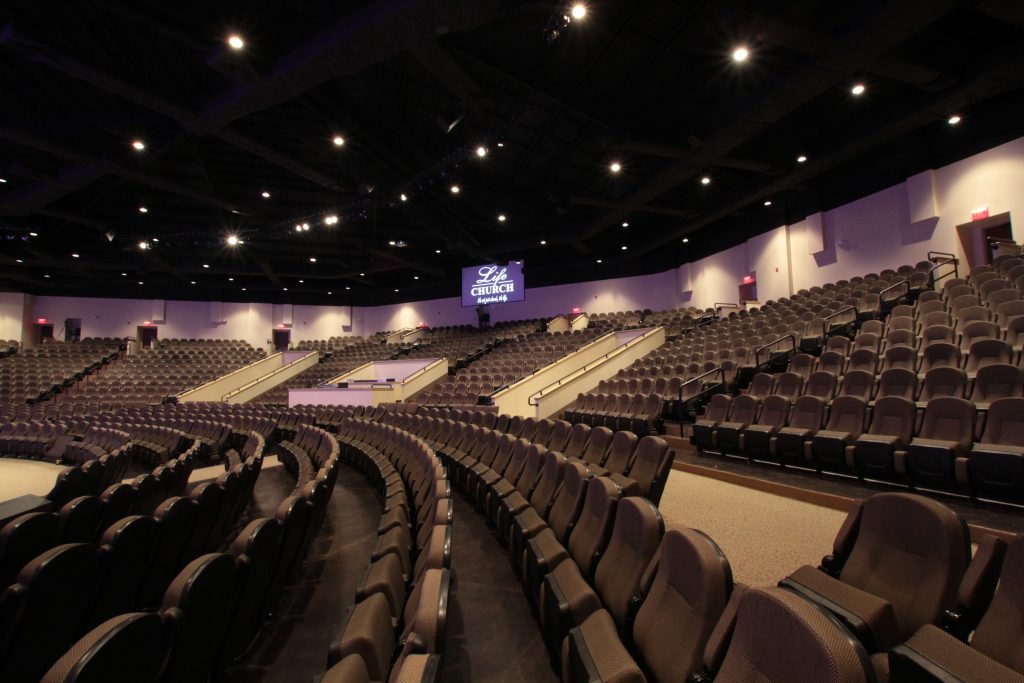
The large auditorium spaces incorporate vertical wall panel systems and layered acoustic surfaces that break up reflections and absorb excess sound energy. These panelized systems become architectural features rather than hidden technical necessities. Their rhythm and scale create visual texture while improving speech intelligibility and musical clarity.
In larger rooms with significant ceiling volume and sloped seating arrangements, these acoustic wall treatments help prevent flutter echo and reverberation buildup, ensuring worship music remains immersive without sacrificing the spoken word.
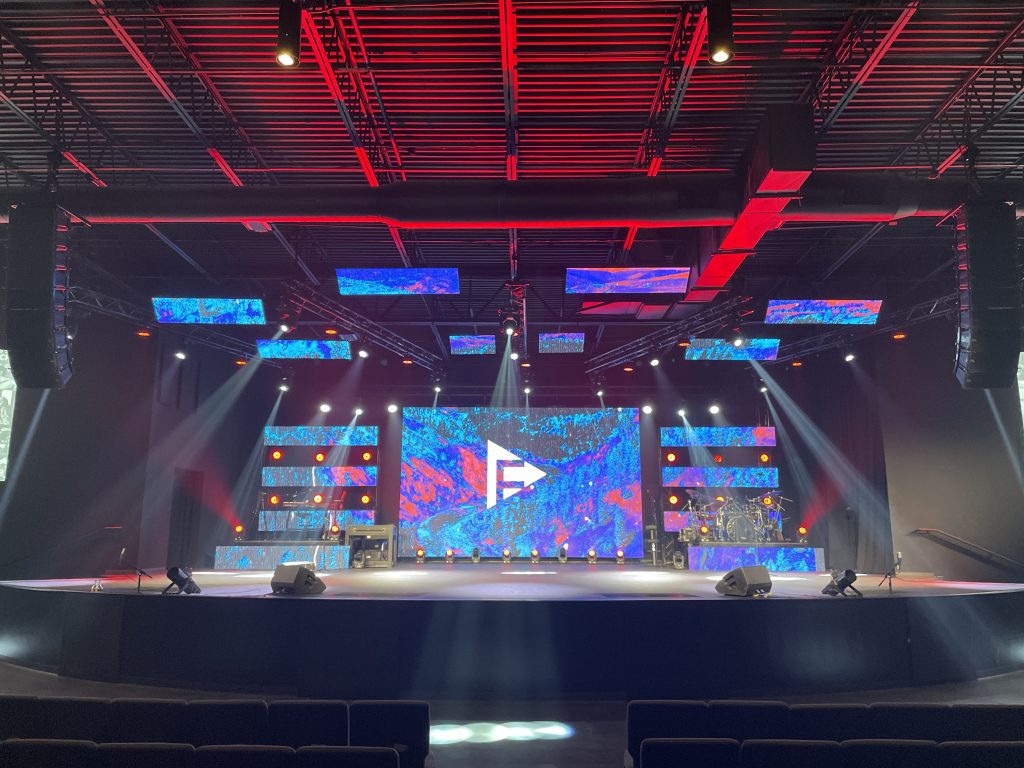
In black-box and contemporary environments, acoustics become more integrated into exposed structural systems. Dark ceilings, suspended elements, and hidden absorptive materials create controlled performance spaces while preserving a modern aesthetic.
At Daman+Lechtenberger, acoustical design is viewed as architecture—not equipment. We intentionally integrate acoustic performance into the visual identity of the room working with the AVL Integrator.
Lighting as an Architectural Layer
Lighting in these worship spaces moves beyond illumination; it becomes a tool for shaping atmosphere and emotional experience.
The larger auditorium environments utilize layered lighting strategies with architectural downlighting providing ambient visibility while theatrical lighting systems establish focal hierarchy. Recessed ceiling fixtures maintain visual cleanliness while stage lighting transforms the room depending on service type.
Contemporary worship environments incorporate exposed structure and theatrical grid systems that allow lighting flexibility for worship, teaching, concerts, and special events. Dynamic lighting introduces energy and movement while preserving the ability to transition into more intimate moments.
Integrated LED systems and suspended lighting elements create architectural rhythm overhead while allowing technology to disappear into the overall design.
Lighting is intentionally designed around several objectives:
Creating visual focus toward the stage
Supporting livestream and broadcast requirements
Providing flexibility for multiple ministry styles
Enhancing emotional and spiritual engagement
Maintaining comfortable room illumination outside service times
The result is a space capable of transformation—equally functional during a weekday event or a high-energy worship experience.
Flexible Seating Strategies: Fixed and Adaptable Solutions
The seating approaches shown across these projects illustrate how worship environments are increasingly designed for flexibility.
The larger auditorium spaces utilize fixed and semi-fixed seating systems organized in fan-shaped and tiered arrangements. These configurations improve sightlines, draw attention toward the platform, and create a communal worship experience where every seat maintains strong visual connection.
Sloped seating and elevated platforms increase intimacy despite larger room capacities. The architecture minimizes perceived distance between worship leaders and attendees.
By contrast, multipurpose environments embrace movable seating systems with tables and chairs arranged in multiple configurations. Round table layouts support fellowship gatherings, classes, meals, student ministries, and special events while allowing rapid room transformation.
Flexible seating strategies provide opportunities for:
Worship services
Banquets and fellowship events
Conferences
Student gatherings
Community events
Educational programming
At Daman+Lechtenberger, flexibility is often designed directly into the architectural DNA of the room. Spaces can evolve throughout the week without sacrificing identity or function.
Stage Design and Platform Placement
Stage placement significantly influences how worship spaces feel and function.
In larger auditoriums, platforms are centrally located with broad horizontal stage expressions that maximize visibility and create strong visual anchors. These stages support worship teams, teaching environments, dramatic productions, and broadcast requirements simultaneously.
Platform depth becomes critical. Modern worship environments require space for musicians, production equipment, LED technology, and movement. Stages increasingly function as flexible environments rather than static pulpit locations.
The contemporary stage environments shown here also demonstrate layered technology integration through LED walls, distributed display elements, and theatrical lighting systems. Rather than architecture competing with technology, the architecture creates a framework that allows technology to enhance the worship experience.
Production spaces and front-of-house locations are equally important design considerations. Control areas are intentionally positioned for optimal sightlines and acoustic accuracy, ensuring technology teams remain integrated into the experience rather than isolated from it.
The Daman+Lechtenberger Design Philosophy
At Daman+Lechtenberger, worship spaces are designed as complete ecosystems where architecture, technology, acoustics, and ministry goals function together.
Whether designing a large tiered worship auditorium, a flexible multipurpose room, or a contemporary performance-driven environment, our approach centers on creating spaces that support how people gather and experience community.
The design process considers:
Acoustical performance integrated into architecture
Layered lighting systems and theatrical flexibility
Fixed and adaptable seating strategies
Stage placement and sightline optimization
Broadcast and technology integration
Long-term adaptability and ministry growth
The result is more than a room. It is a worship environment intentionally designed to create clarity, connection, and meaningful experiences for every person who enters the space